Skip to content
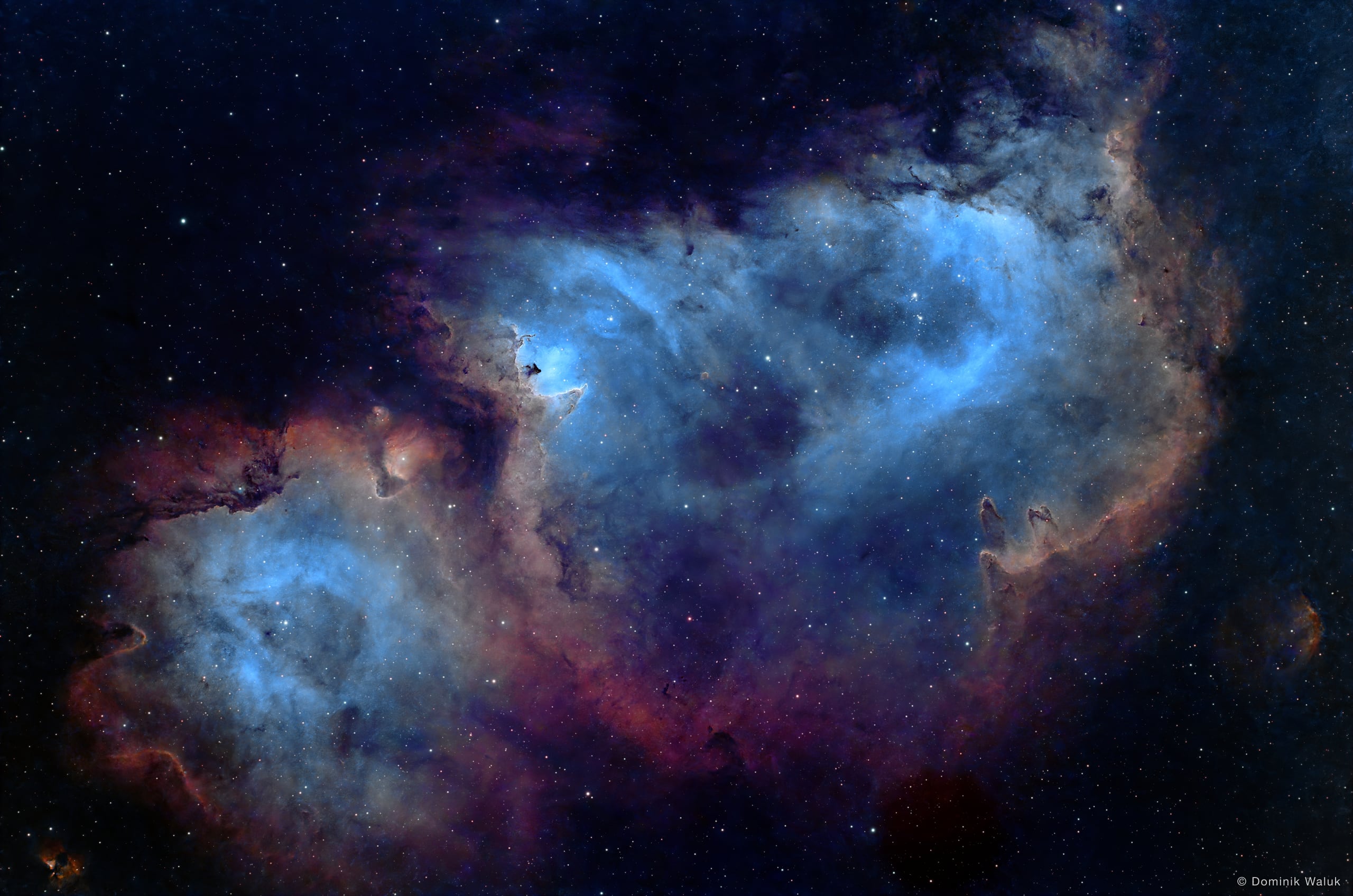
The Soul Nebula: two large, blue glowing cavities of gas with red and golden edges and dark pillars of dust.

Collection

The universe is filled with stories written in light.

Collected over countless nights beneath the skies above Zürich, these images are the result of exploration, patience and a fascination with what lies beyond our immediate view.

Each photograph represents a unique journey of exploration, captured through a telescope and transformed into a visual experience through careful processing and interpretation.

When I set up a telescope for the night, I rarely know where the experience will lead, but every observation offers a new perspective and a deeper connection to the universe around us. From a rooftop terrace in Zürich, it is remarkable how much can be revealed through patience, technology and careful processing, bringing into view details that would otherwise remain invisible to the human eye.

Whether you are an astronomy enthusiast or simply someone who enjoys looking up in wonder, I hope this collection offers a moment to pause, reflect, and immerse yourself in the beauty, scale and mystery of the universe.

Perhaps it may even inspire a deeper appreciation of our place within it, reminding us that the sky truly has no limits.

The photographs · 29

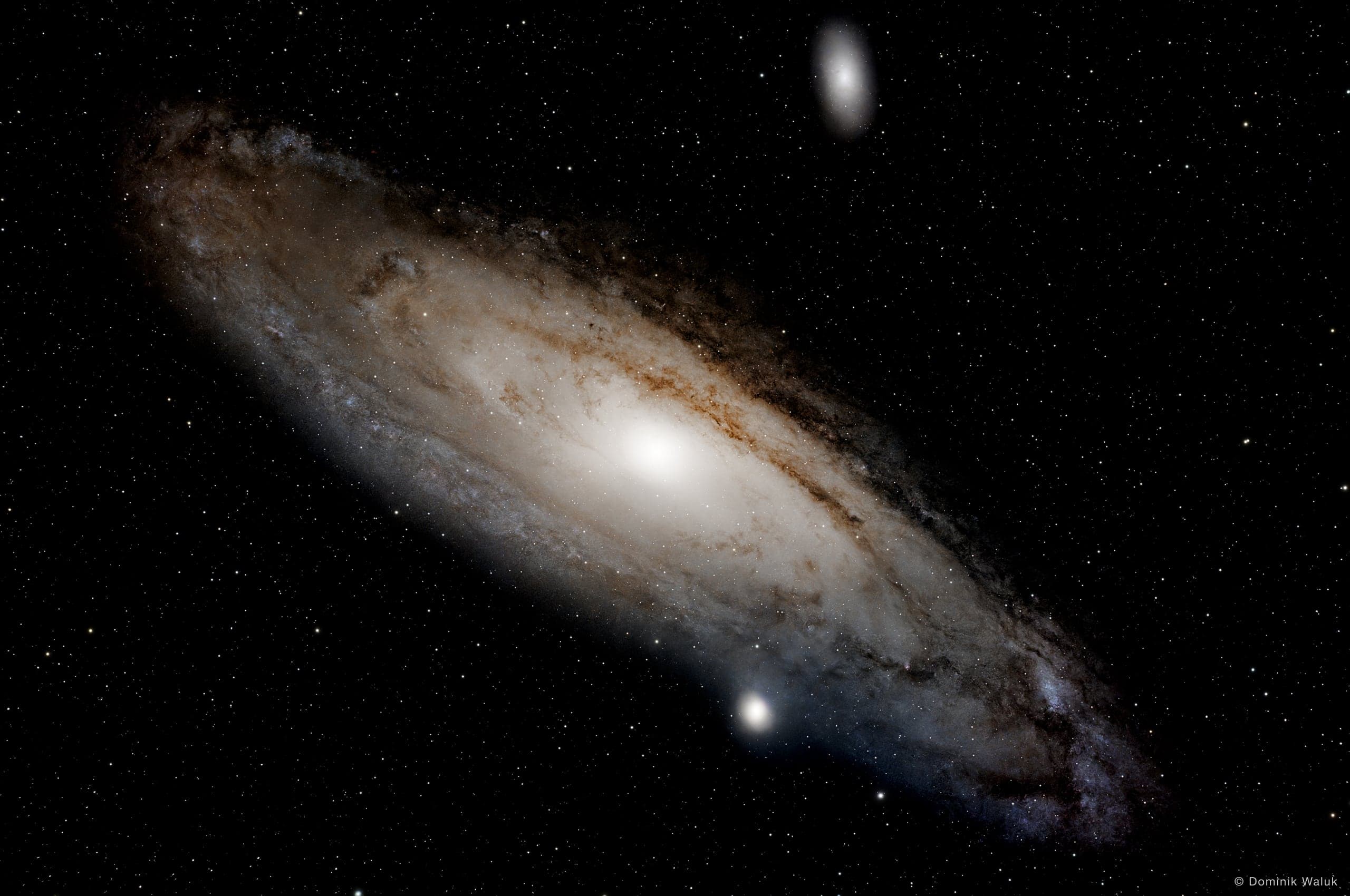
  1. The Andromeda Galaxy: a large spiral galaxy seen at an angle, with a bright core and dark dust lanes, and two smaller companion galaxies above and below it.

    M31

    Andromeda Galaxy

    The Andromeda Galaxy is the nearest major spiral galaxy to the Milky Way, located approximately 2.5 million light-years from Earth. Containing hundreds of billions of stars, it is the largest member of our Local Group and one of the most distant objects visible to the unaided eye under dark skies.

    This image reveals Andromeda's intricate dust lanes together with its companion galaxies, M32 and M110. Capturing such detail from a rooftop terrace in Zürich demonstrates how much structure can be uncovered through patience, technology and careful processing.

    Looking at Andromeda, it is difficult not to wonder how many worlds might exist among its countless stars. The light recorded in this image began its journey long before human civilisation took shape, offering a brief glimpse into a universe far greater than our everyday experience.

    Image details

    Location
    Zürich, Switzerland
    Telescope
    ZWO FF130 APO
    Camera
    ZWO ASI2600MC Duo
    Mount
    Sky-Watcher EQ6-R Pro
    Filter
    None — a clear summer night without moonlight
    Total integration
    12 hours
    Processing
    PixInsight
    Get photograph
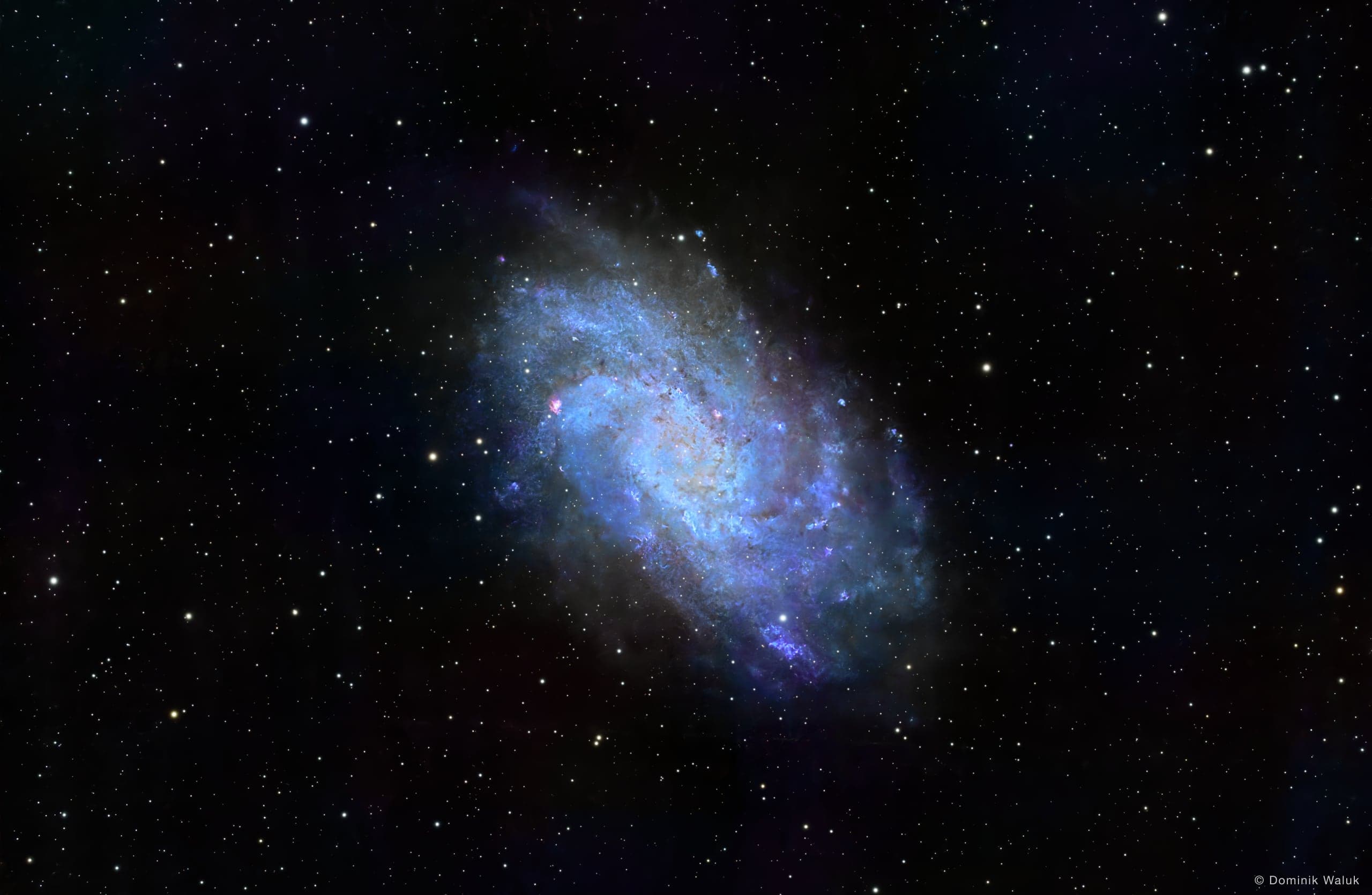
  2. The Triangulum Galaxy: a tilted spiral galaxy in blue and white with loose arms dotted with pink knots, in a dark field of stars.

    M33

    Triangulum Galaxy

    The Triangulum Galaxy is the third-largest member of the Local Group and lies approximately 2.7 million light-years from Earth. Viewed almost face-on from Earth, its spiral structure reveals numerous regions where new stars continue to form among clouds of gas and dust.

    This image highlights the galaxy's delicate and fragmented appearance, with bright star-forming regions scattered throughout its spiral arms. Unlike Andromeda's prominent central bulge, Triangulum appears more open and textured, allowing the structure of the galaxy itself to take centre stage.

    Looking at Triangulum, I find it remarkable how different neighbouring galaxies can appear despite sharing the same cosmic neighbourhood. Its delicate blue glow and intricate structure offer a reminder that even on the grandest scales, the universe expresses itself in countless forms.

    Image details

    Location
    Zürich, Switzerland
    Telescope
    ZWO FF130 APO
    Camera
    ZWO ASI2600MC Duo
    Mount
    Sky-Watcher EQ6-R Pro
    Filter
    None — a clear summer night without moonlight
    Total integration
    10 hours
    Processing
    PixInsight
    Get photograph
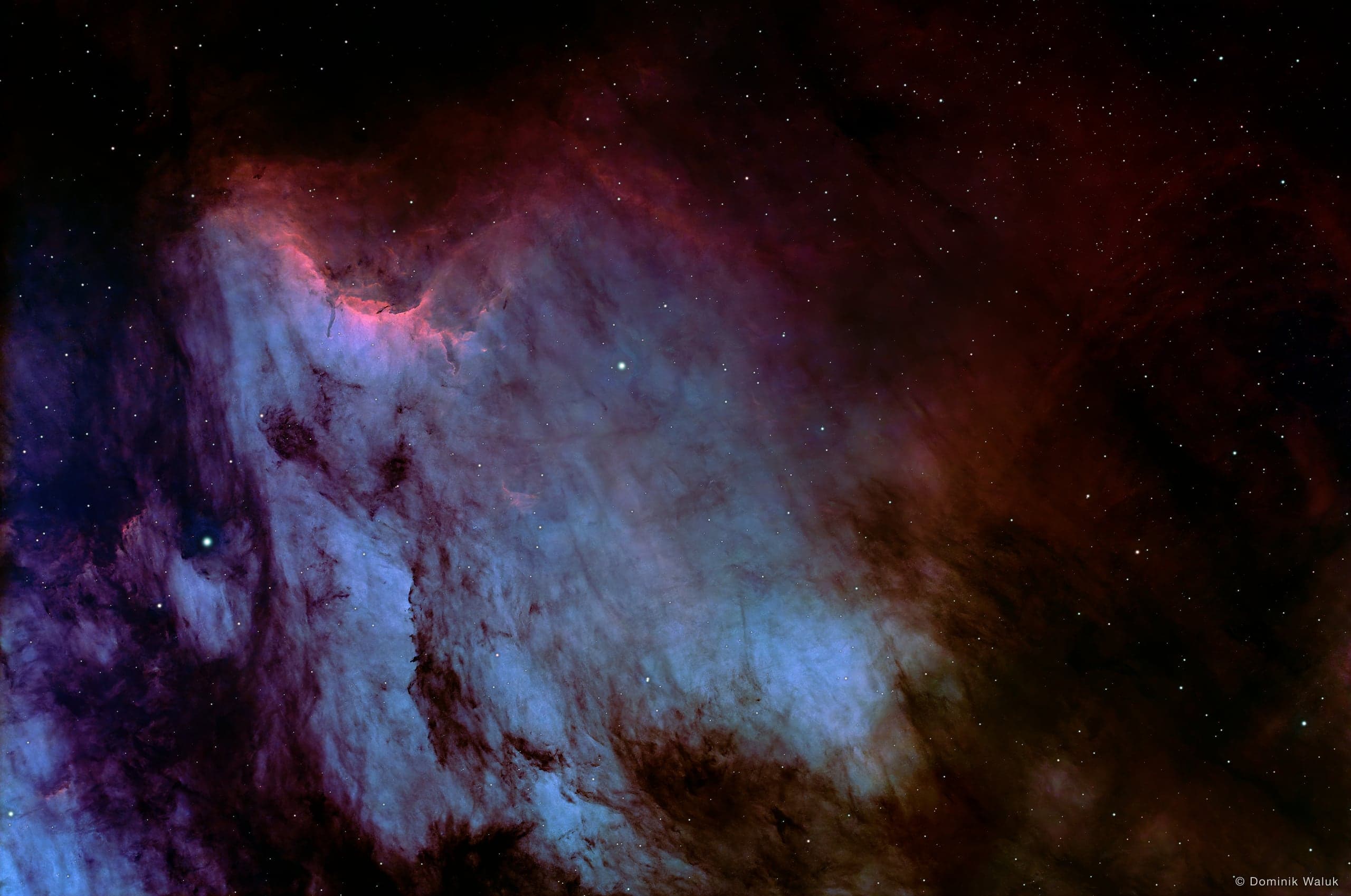
  3. The Pelican Nebula: a wide, blue-tinged wall of gas with a glowing red edge reaching in from the left, laced with dark threads of dust.

    IC 5070

    Pelican Nebula

    The Pelican Nebula (IC 5070) is a vast emission nebula located approximately 1,800 light-years away in the constellation Cygnus. It is an active star-forming region where intense radiation from nearby young stars continues to shape and erode the surrounding gas and dust.

    This image reveals the sharp ridges and dark structures that define the nebula's shape, together with delicate glowing clouds hidden within its interior. The dramatic contours are not permanent features, but part of a constantly evolving landscape where stellar radiation is slowly reshaping the surrounding material and triggering new generations of stars.

    Unlike most observers, my first impression was not of a pelican but of a mammoth emerging from the darkness. What continues to captivate me is the contrast between the sharply defined edges and the subtle glow hidden deeper within the nebula, giving the entire structure a sense of both strength and fragility at the same time.

    Image details

    Location
    Zürich, Switzerland
    Telescope
    ZWO FF130 APO
    Camera
    ZWO ASI2600MC Duo
    Mount
    Sky-Watcher EQ6-R Pro
    Filter
    Optolong L-Ultimate
    Total integration
    8 hours
    Processing
    PixInsight
    Get photograph
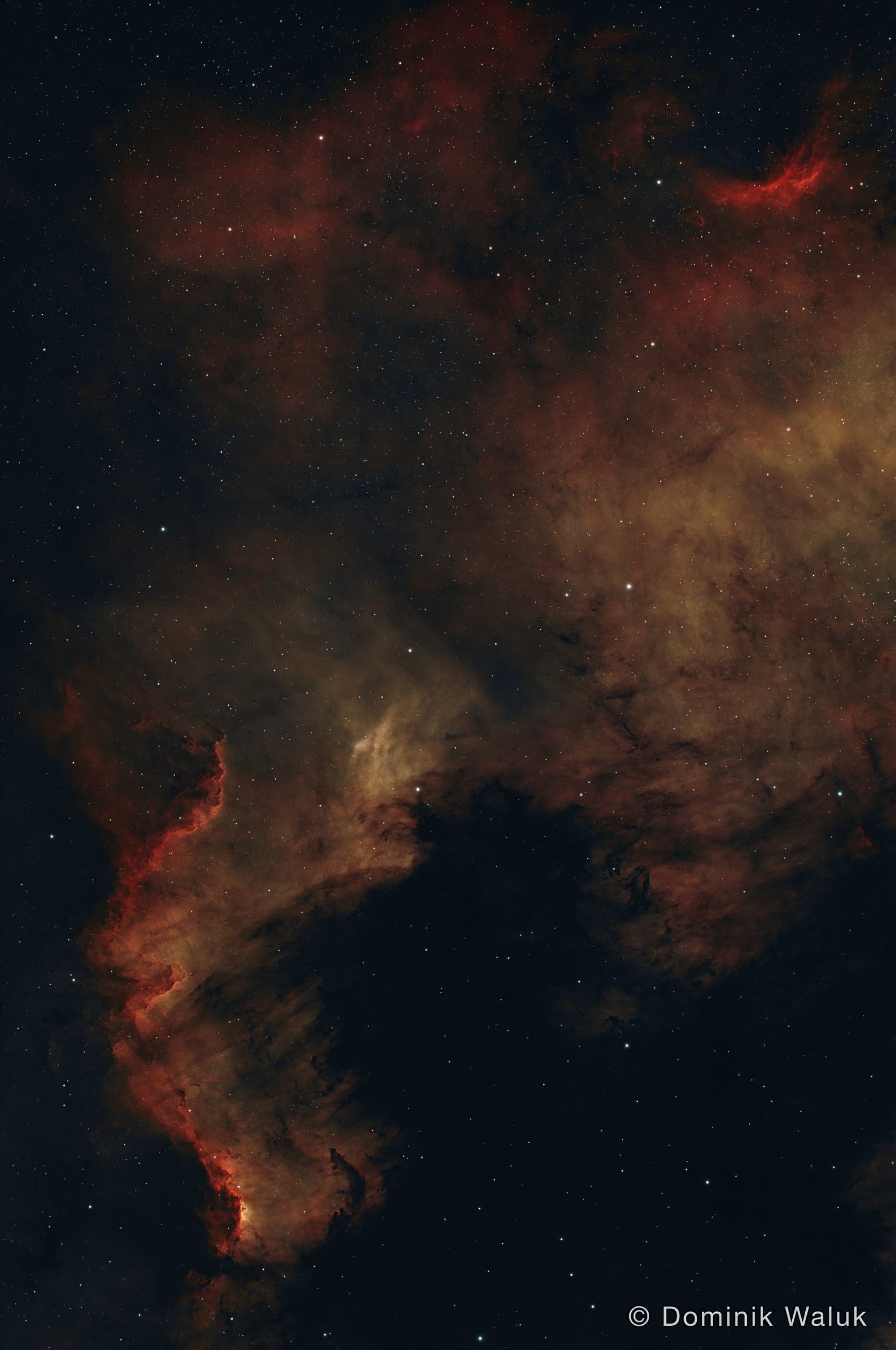
  4. The North America Nebula in portrait format: soft red and golden-brown clouds of gas, with a bright, winding edge at the lower left against a dark cloud of dust.

    NGC 7000

    North America Nebula

    The North America Nebula (NGC 7000) is a vast emission nebula located approximately 2,500 light-years away in the constellation Cygnus. Its glowing hydrogen clouds emit the characteristic red light seen throughout the image, while dark dust lanes weave through the region and help shape its distinctive appearance.

    This image clearly reveals the continent-like outline that gives the nebula its popular name, with the Gulf of Mexico, Florida and the western coastline easily recognisable. The darker regions within the nebula are dense clouds of cosmic dust that obscure portions of the glowing hydrogen behind them, creating striking contrast and depth across the scene.

    Unlike some objects that require time and imagination to recognise, the shape of North America appeared almost immediately when I first processed this image. What continues to fascinate me, however, is not the resemblance itself, but the delicate glow hidden throughout the continent, where light and shadow combine to reveal an extraordinary level of structure within a seemingly familiar shape.

    Image details

    Location
    Zürich, Switzerland
    Telescope
    ZWO FF130 APO
    Camera
    ZWO ASI2600MC Duo
    Mount
    Sky-Watcher EQ6-R Pro
    Filter
    Optolong L-Ultimate
    Total integration
    10 hours
    Processing
    PixInsight
    Get photograph
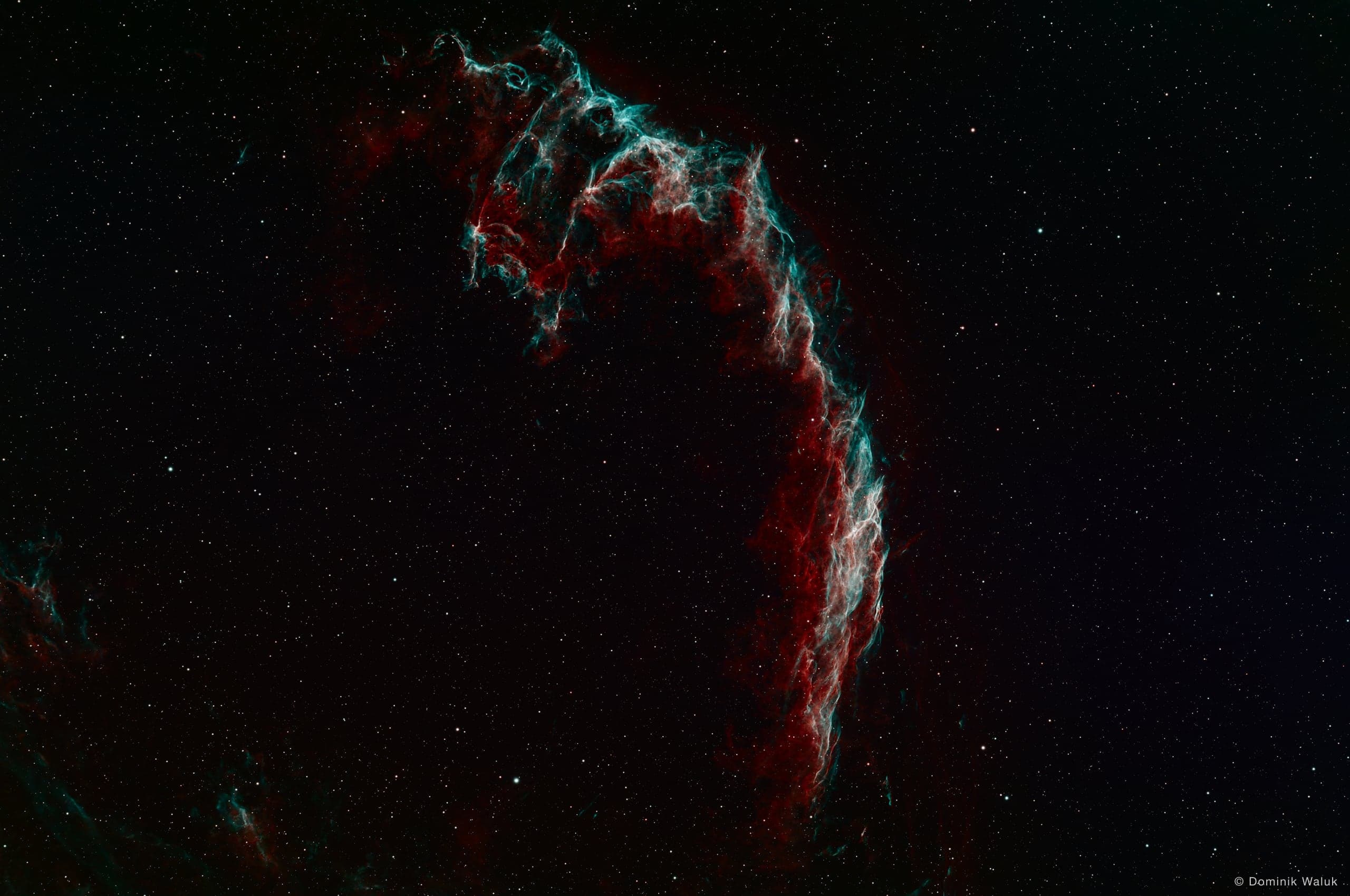
  5. The Eastern Veil Nebula: a sweeping arc of fine turquoise and red filaments against a dark field of stars.

    NGC 6992

    Eastern Veil Nebula

    The Eastern Veil Nebula is part of the Veil Nebula complex, the expanding remains of a massive star that exploded as a supernova thousands of years ago. The glowing filaments seen today are the result of the explosion's shockwave energising surrounding gas and causing it to emit light.

    This image reveals the intricate network of filaments that make the Eastern Veil one of the most striking supernova remnants in the night sky. The delicate structures captured here are the remnants of a stellar explosion whose energy continues to shape the surrounding region long after the original star disappeared.

    The first time I processed this object, I immediately saw the silhouette of a giant bat emerging from the darkness. It is fascinating how a structure formed by a stellar explosion can appear both delicate and powerful, transforming a distant cosmic event into something that feels unexpectedly familiar.

    Image details

    Location
    Zürich, Switzerland
    Telescope
    ZWO FF130 APO
    Camera
    ZWO ASI2600MC Duo
    Mount
    Sky-Watcher EQ6-R Pro
    Filter
    Optolong L-Ultimate
    Total integration
    8 hours
    Processing
    PixInsight
    Get photograph
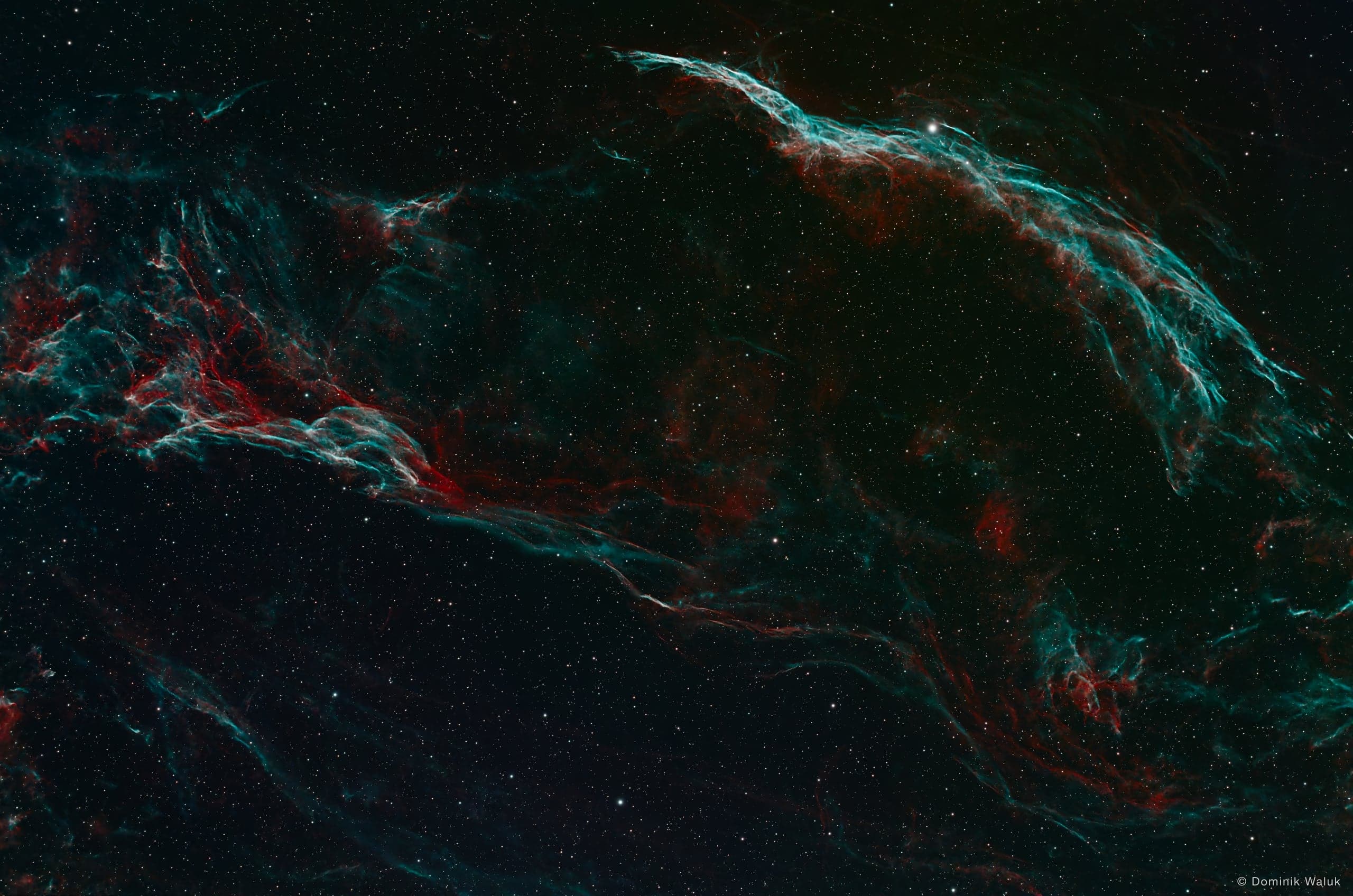
  6. The Western Veil Nebula: long, fine strands of turquoise and red stretching across a dense field of stars.

    NGC 6960

    Western Veil Nebula

    The Western Veil Nebula is part of the Veil Nebula complex, the remains of a massive star that exploded in a supernova thousands of years ago. The glowing filaments trace the expanding shockwave as it moves through interstellar gas, creating one of the most detailed supernova remnants visible from Earth.

    This image reveals the intricate threads and sweeping arcs that make the Western Veil Nebula so distinctive. The bright foreground star 52 Cygni appears embedded within the nebulosity, although it is actually much closer to Earth and unrelated to the distant supernova remnant behind it.

    When I first explored this object, the scene immediately reminded me of a dark winged form emerging from the depths of space. It is fascinating how objects separated by more than a thousand light-years can align from our perspective, creating an image that feels both mysterious and strangely familiar.

    Image details

    Location
    Zürich, Switzerland
    Telescope
    ZWO FF130 APO
    Camera
    ZWO ASI2600MC Duo
    Mount
    Sky-Watcher EQ6-R Pro
    Filter
    Optolong L-Ultimate
    Total integration
    10 hours
    Processing
    PixInsight
    Get photograph
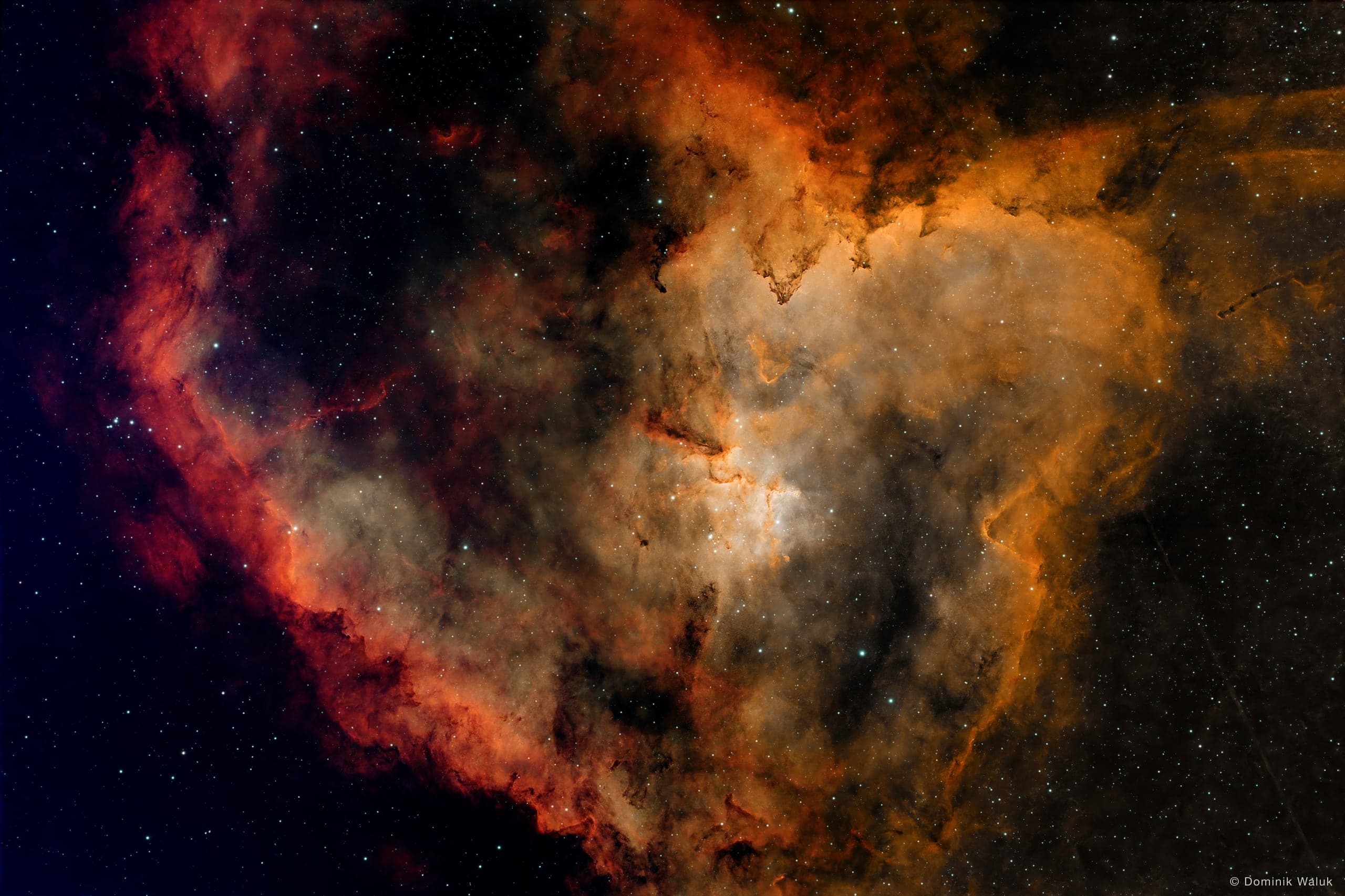
  7. The Heart Nebula: a wide cloud of golden and orange gas with glowing red edges and dark pillars of dust.

    IC 1805

    Heart Nebula

    The Heart Nebula is a vast emission nebula located approximately 7,500 light-years away in the constellation Cassiopeia. Rich in hydrogen gas and regions of active star formation, it spans more than 100 light-years across space and continues to give birth to new generations of stars.

    This image reveals the glowing hydrogen clouds that give the nebula its characteristic red colour, along with darker dust structures woven throughout the region. Hidden within the nebula are young stars whose radiation shapes and illuminates the surrounding gas over millions of years.

    The Heart Nebula is one of the objects I find myself returning to most often. What fascinates me is not only how clearly its outline resembles the heart symbol we use as humans, but also how much light and darkness coexist within it. Behind its familiar shape lies a vast stellar nursery, where glowing hydrogen clouds and dark dust structures combine to create a scene that feels both powerful and surprisingly familiar.

    Image details

    Location
    Zürich, Switzerland
    Telescope
    ZWO FF130 APO
    Camera
    ZWO ASI2600MC Duo
    Mount
    Sky-Watcher EQ6-R Pro
    Filter
    Optolong L-Ultimate
    Total integration
    10 hours
    Processing
    PixInsight
    Get photograph
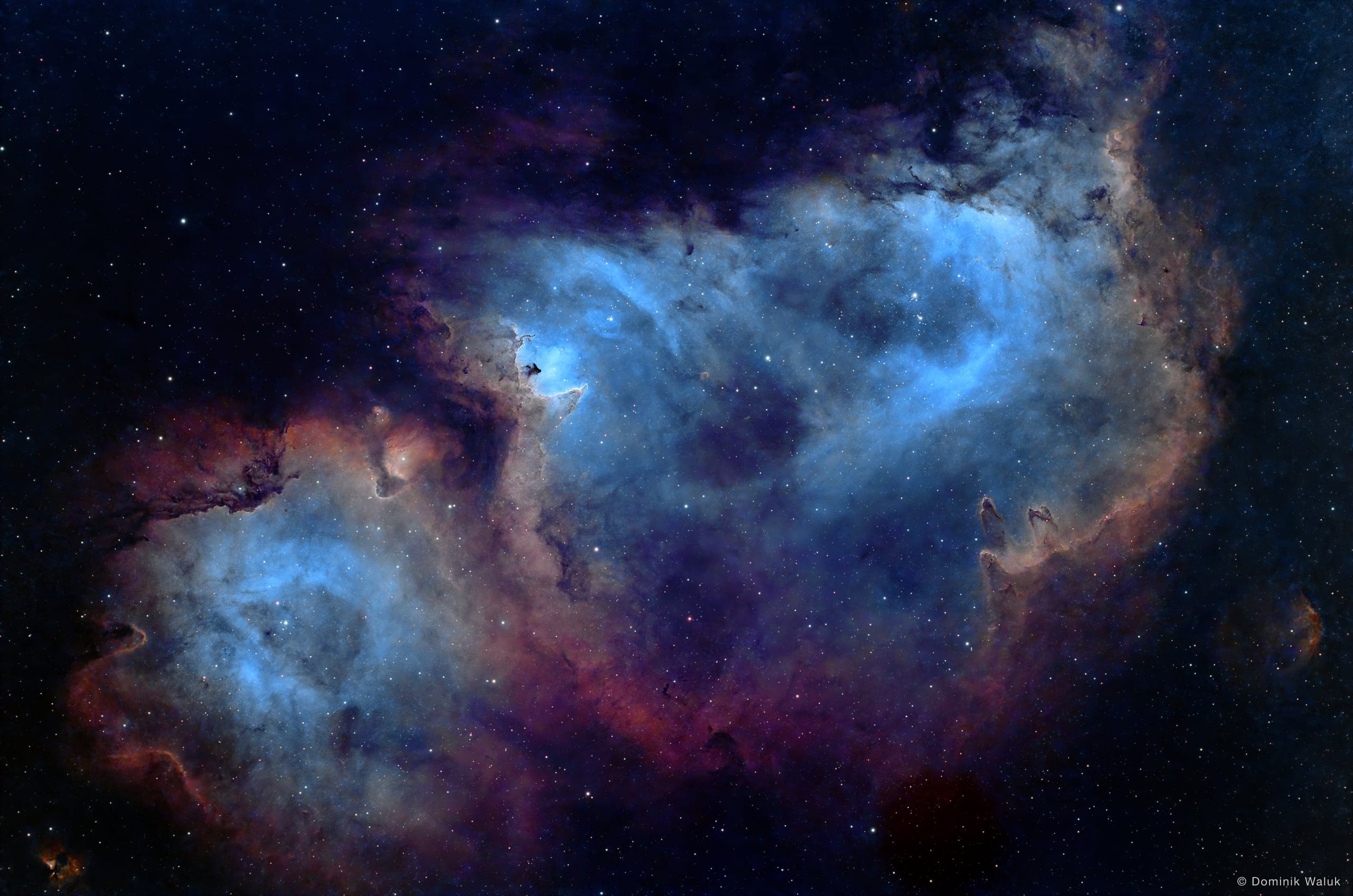
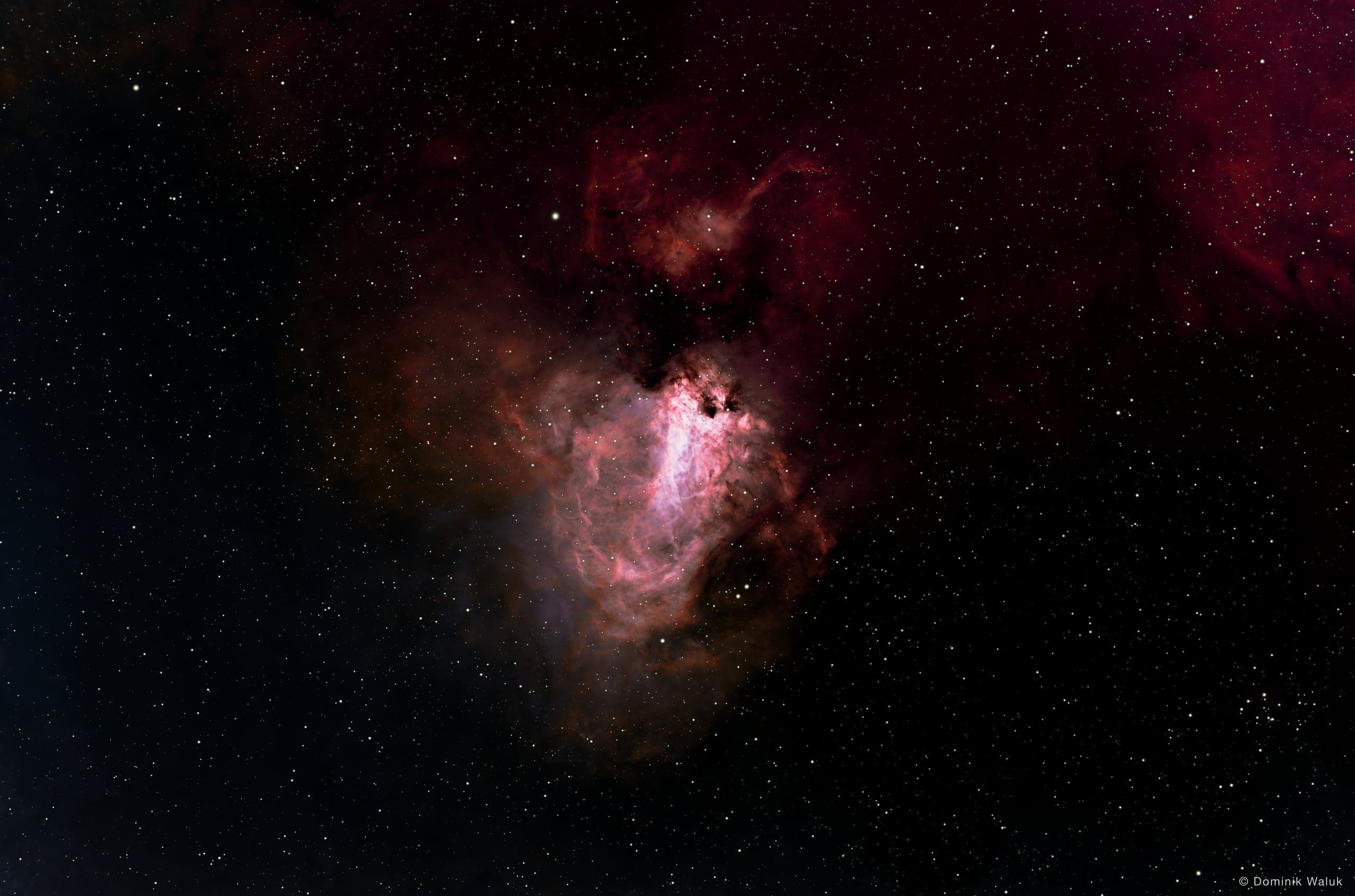
  8. The Soul Nebula: two large, blue glowing cavities of gas with red and golden edges and dark pillars of dust.

    IC 1848

    Soul Nebula

    The Soul Nebula (IC 1848) is a large emission nebula located approximately 7,500 light-years away in the constellation Cassiopeia. Rich in hydrogen gas and active star-forming regions, it forms a vast complex together with the neighbouring Heart Nebula, where new generations of stars continue to emerge from clouds of gas and dust.

    This image reveals intricate layers of glowing hydrogen and dark dust woven throughout the nebula. The subtle blue tones and varying densities of gas create a remarkable sense of depth, while hidden stellar nurseries continue to shape and illuminate the surrounding structure.

    The Soul Nebula is one of the objects that has stayed with me most strongly. Drawn by its name, I found myself wondering what gave rise to it and whether there was something about its shape that inspired such a description. As the first images slowly appeared on the screen, I was struck by the soft blue light gathered within the nebula and the extraordinary depth hidden across the region, creating a scene that felt both mysterious and strangely contemplative.

    Image details

    Location
    Zürich, Switzerland
    Telescope
    ZWO FF130 APO
    Camera
    ZWO ASI2600MC Duo
    Mount
    Sky-Watcher EQ6-R Pro
    Filter
    Optolong L-Ultimate
    Total integration
    10 hours
    Processing
    PixInsight
    Get photograph
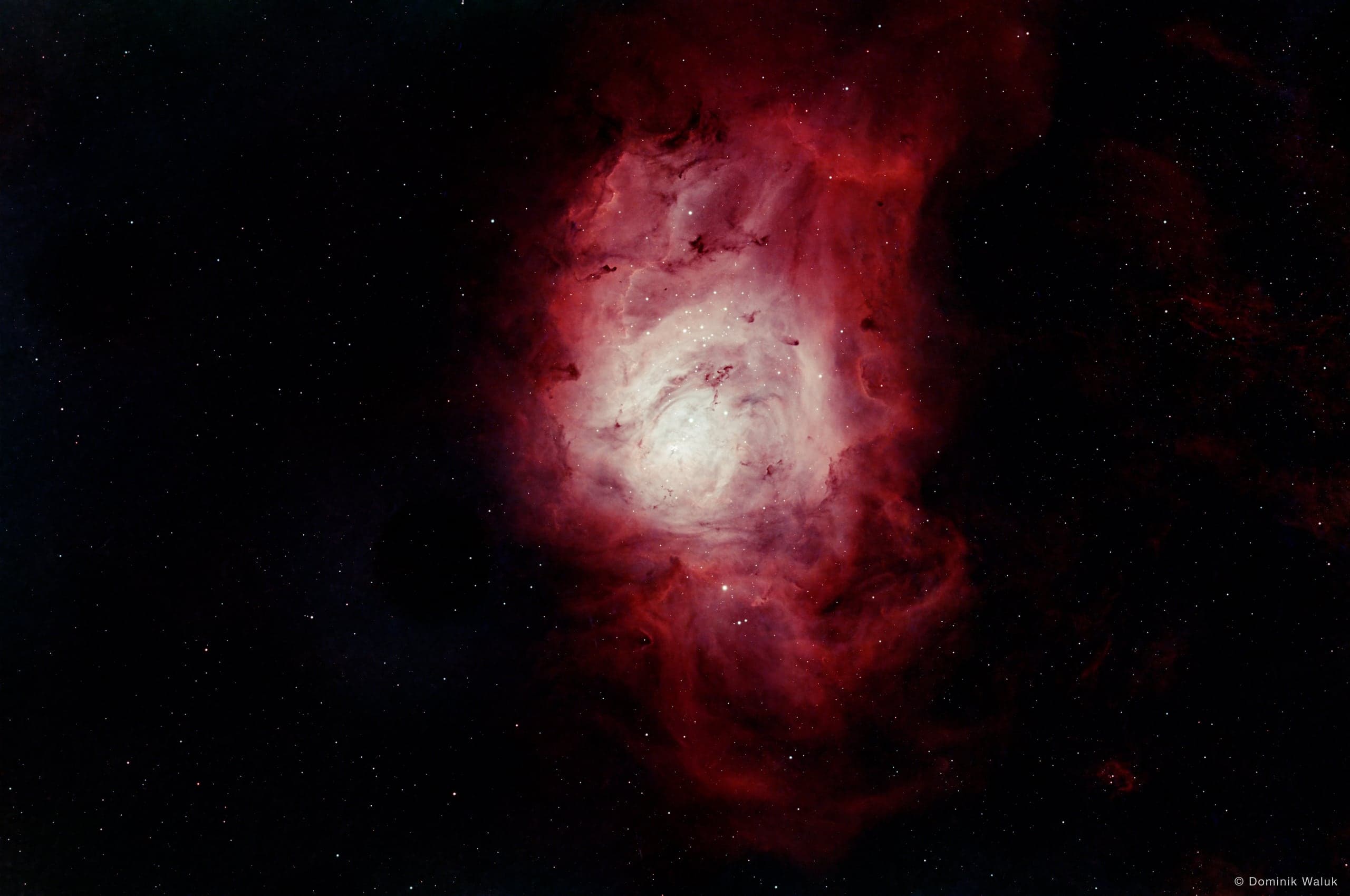
  9. The Lagoon Nebula: a bright white and pink core surrounded by a large cloud of red gas with dark threads of dust.

    M8

    Lagoon Nebula

    The Lagoon Nebula (Messier 8) is a vast emission nebula located approximately 4,000 to 5,000 light-years away in the constellation Sagittarius. Rich in glowing hydrogen gas and active star-forming regions, it is one of the brightest stellar nurseries visible in the night sky.

    This image reveals the intricate layers of glowing gas that give the Lagoon Nebula its remarkable depth. Scattered throughout the nebula are numerous dark structures known as Bok globules, dense clouds of gas and dust named after astronomer Bart Bok, who recognised them as potential birthplaces of future stars. These dark pockets appear black because they block the light behind them, standing out sharply against the glowing hydrogen clouds.

    The more time I spend looking at this object, the less certain I become about its nickname. At first glance it resembles a peaceful lagoon of glowing gas, yet the deeper I look into the layers of light and darkness, the more it feels like a journey into something far more mysterious. The countless Bok globules and shadowy structures create a sense of depth that invites the eye further and further into the nebula, revealing new details with every glance.

    Image details

    Location
    Zürich, Switzerland
    Telescope
    ZWO FF130 APO
    Camera
    ZWO ASI2600MC Duo
    Mount
    Sky-Watcher EQ6-R Pro
    Filter
    Optolong L-Ultimate
    Total integration
    10 hours
    Processing
    PixInsight
    Get photograph
  10. The Omega Nebula (Swan Nebula): a bright pink and white glowing cloud of gas with dark patches of dust, surrounded by reddish wisps of nebulosity.

    M17

    Omega Nebula (Swan Nebula)

    The Omega Nebula (Messier 17), also known as the Swan Nebula, is one of the brightest star-forming regions in the Milky Way, located approximately 5,500 light-years away in the constellation Sagittarius. Its glowing hydrogen clouds are illuminated by young massive stars, whose radiation continues to shape the surrounding gas and dust.

    This image reveals the intricate filaments and layered structures that make the Omega Nebula so distinctive. The bright central cavity creates a striking tunnel-like effect, while the delicate red filaments are streams of hydrogen gas being sculpted by stellar radiation and powerful winds, forming ripples and flowing patterns throughout the nebula.

    When I first learned its nickname, I naturally searched for the shape of a swan. Instead, I found myself imagining a cobra or even the face of a dragon illuminated from within. The glowing central passage and web of red filaments create an extraordinary sense of depth, making the nebula feel less like a static object and more like a living landscape hidden deep within the galaxy.

    Image details

    Location
    Zürich, Switzerland
    Telescope
    ZWO FF130 APO
    Camera
    ZWO ASI2600MC Duo
    Mount
    Sky-Watcher EQ6-R Pro
    Filter
    Optolong L-Ultimate
    Total integration
    10 hours
    Processing
    PixInsight
    Get photograph
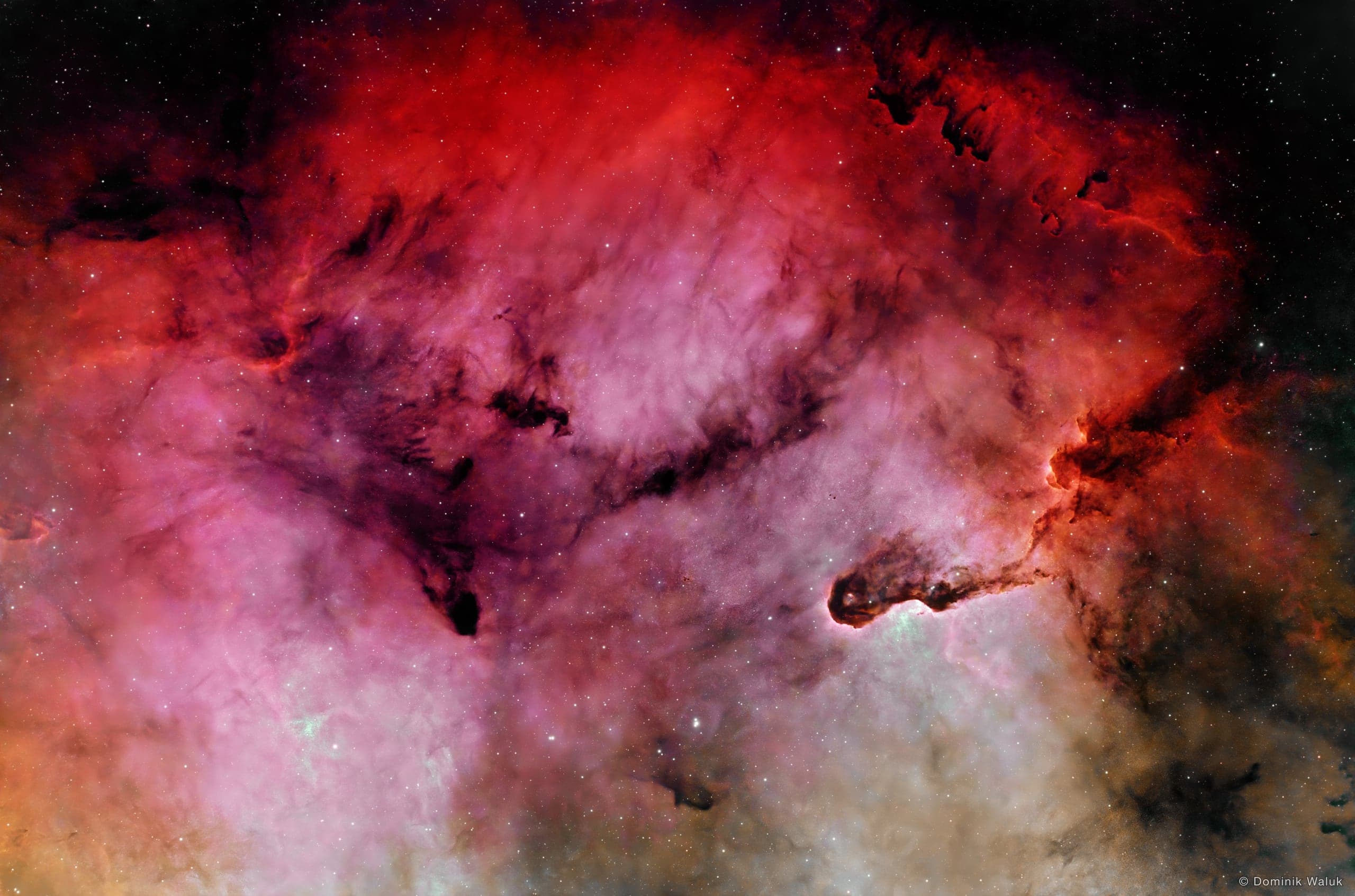
  11. The Elephant's Trunk Nebula: red and pink clouds of gas, with a dark, winding trunk of dust with a glowing rim on the right.

    IC 1396A

    Elephant's Trunk Nebula

    The Elephant Trunk Nebula is a dense concentration of gas and dust located within the larger IC 1396 emission nebula in the constellation Cepheus. The surrounding hydrogen-rich nebula appears red because energized hydrogen gas emits light at specific wavelengths, making it one of the most recognisable colours in astrophotography.

    This image highlights the striking contrast between the dark silhouette of the Elephant Trunk and the glowing hydrogen surrounding it. The dense cloud blocks light from behind it, revealing intricate textures sculpted over millions of years by stellar radiation and interstellar winds.

    When I first encountered this object, I was actually looking for an entire elephant rather than just its trunk. At first I was not even sure I had found the right structure, but once I recognised the shape, the name suddenly made perfect sense. It is a reminder that the universe often reveals its most fascinating details only after taking a closer look.

    Image details

    Location
    Zürich, Switzerland
    Telescope
    ZWO FF130 APO
    Camera
    ZWO ASI2600MC Duo
    Mount
    Sky-Watcher EQ6-R Pro
    Filter
    Optolong L-Ultimate
    Total integration
    10 hours
    Processing
    PixInsight
    Get photograph
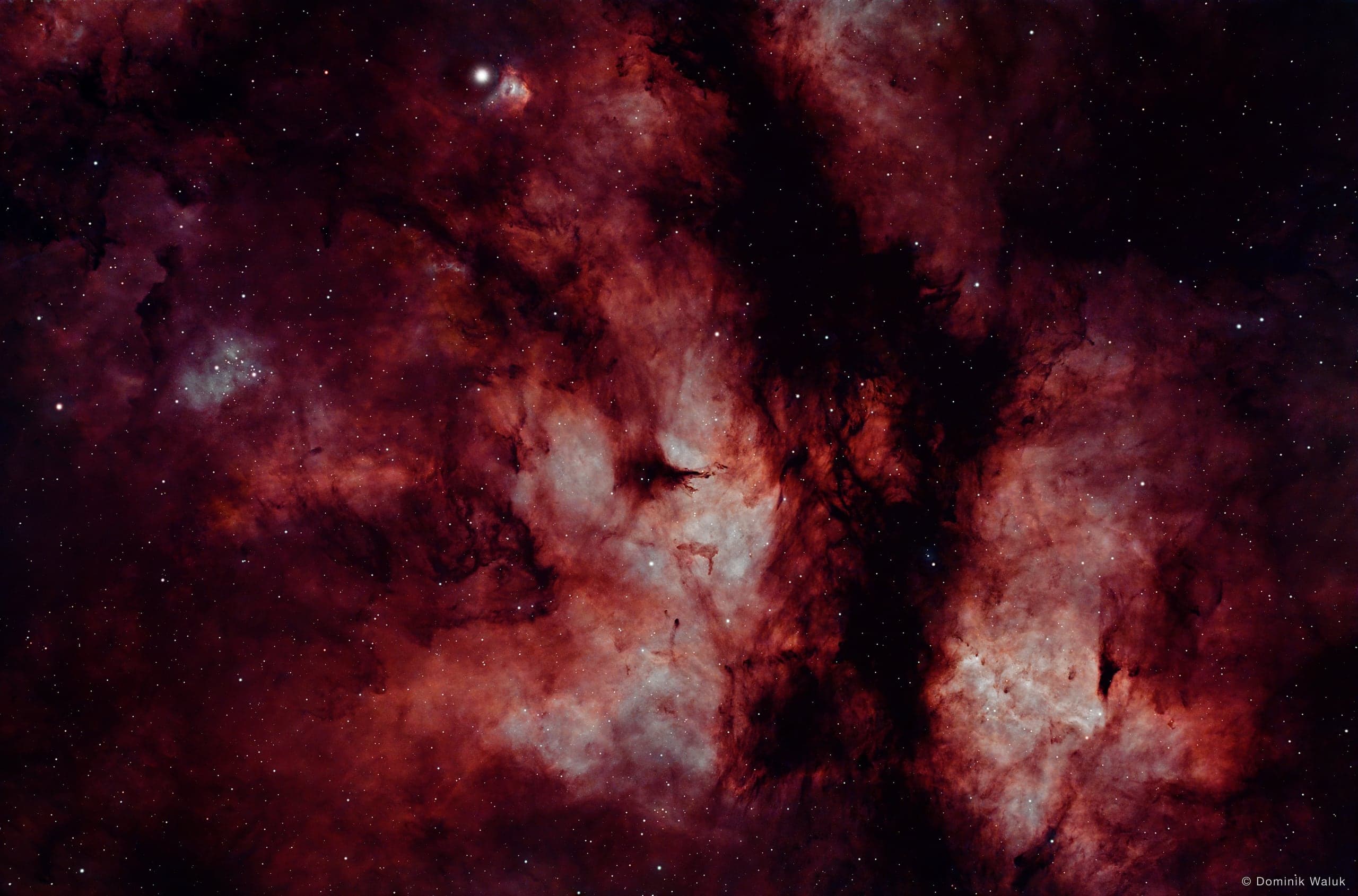
  12. The Butterfly Nebula: wide clouds of red and white gas crossed by dark lanes of dust, with a bright star near the top.

    NGC 6910

    Butterfly Nebula

    The Butterfly Nebula is an emission nebula located within a larger region of gas and dust in the constellation Cygnus. An emission nebula glows because its gas is energised by nearby stars, causing it to emit light that can be recorded by sensitive astronomical cameras.

    This image highlights the delicate symmetry that gives the nebula its popular name. The brilliant star Sadr (Gamma Cygni), a supergiant and one of the most prominent stars in the constellation Cygnus, dominates the scene while the surrounding butterfly-like structure remains clearly visible against the glowing hydrogen clouds.

    Whenever I photograph objects such as this, I am reminded of how naturally the human mind searches for familiar patterns in the universe. What is, in reality, an immense cloud of gas and dust appears from our perspective as something surprisingly elegant and familiar, connecting imagination with observation.

    Image details

    Location
    Zürich, Switzerland
    Telescope
    ZWO FF130 APO
    Camera
    ZWO ASI2600MC Duo
    Mount
    Sky-Watcher EQ6-R Pro
    Filter
    Optolong L-Ultimate
    Total integration
    12 hours
    Processing
    PixInsight
    Get photograph
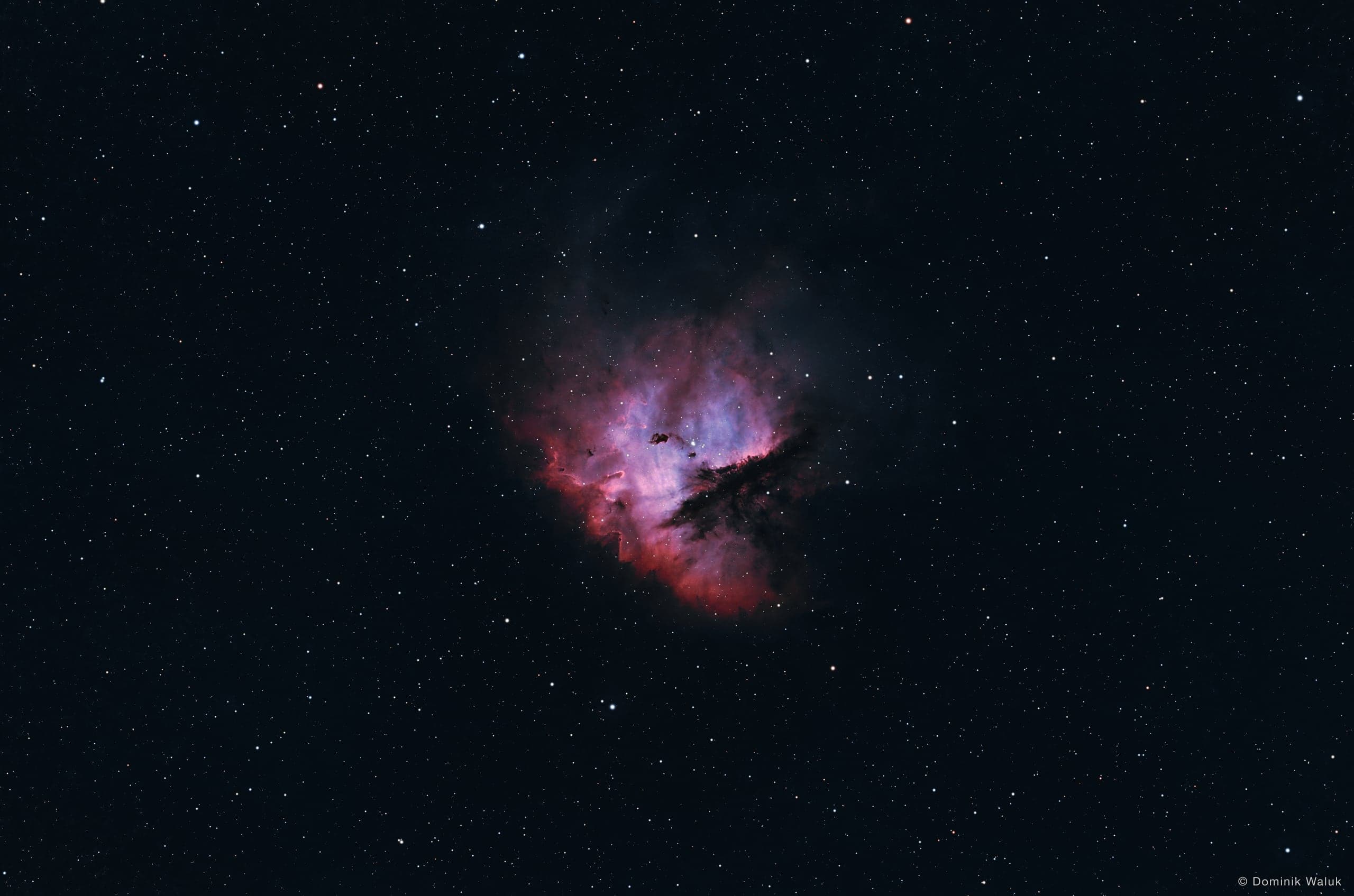
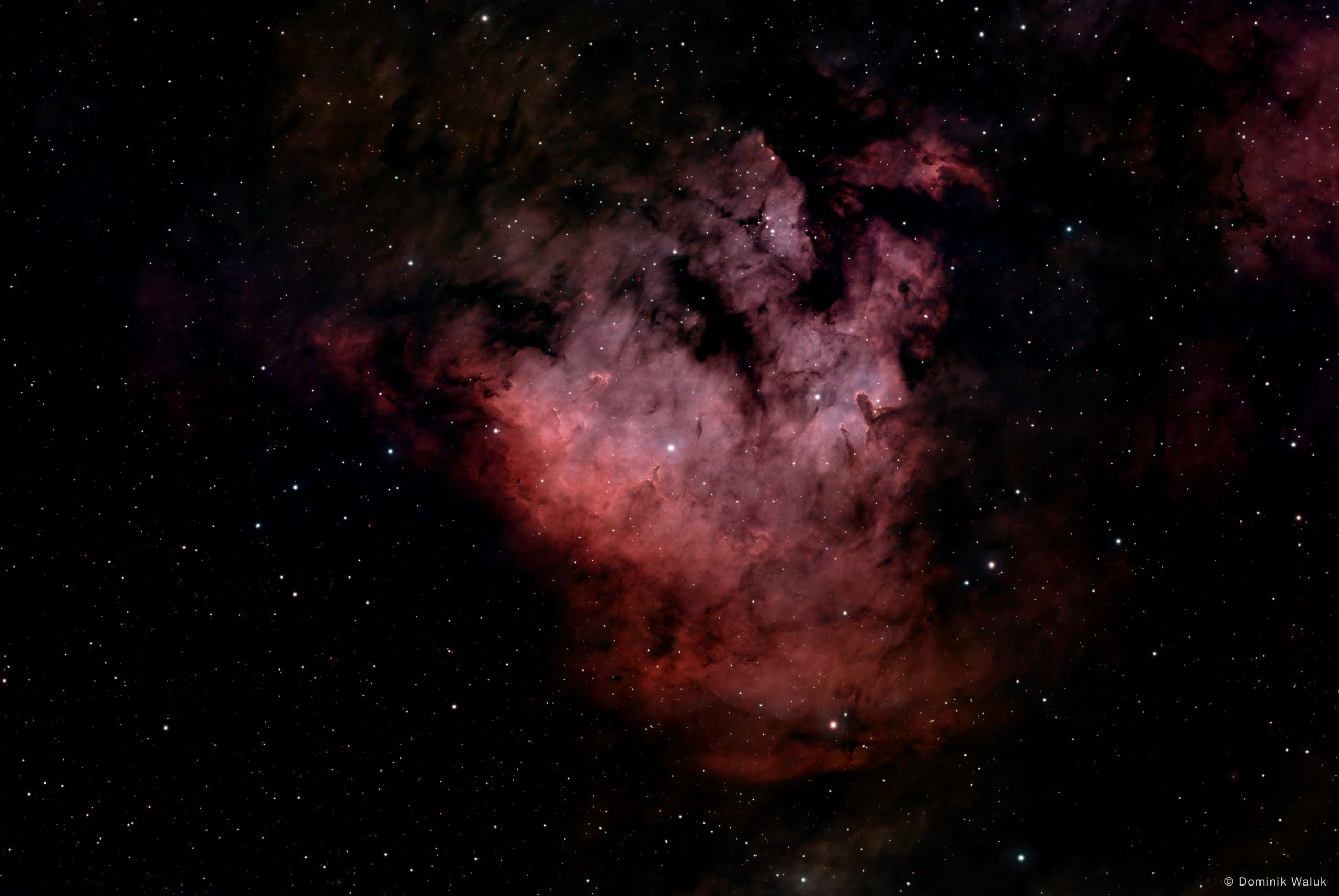
  13. The Pac-Man Nebula: a small pink and blue glowing cloud of gas with a dark notch of dust, in the middle of a wide field of stars.

    NGC 281

    Pac-Man Nebula

    The Pacman Nebula (NGC 281) is an emission nebula located approximately 9,500 light-years away in the constellation Cassiopeia. Rich in glowing hydrogen gas, it contains active star-forming regions where new stars continue to emerge from dense clouds of interstellar material.

    This image highlights the bright hydrogen clouds that define the nebula's characteristic shape, together with dark dust structures that carve into the glowing gas. At the centre of the nebula lie dense pockets of dust known as Bok globules, stellar nurseries where new generations of stars are beginning to form, while the prominent dark lane creates the famous "mouth" that gives the nebula its Pacman-like appearance.

    This was an object I attempted to capture several times before everything finally came together. Moonlight often reduced the contrast and passing clouds frequently interrupted the session, making it difficult to reveal the nebula's full structure. When the conditions finally aligned, the familiar shape appeared immediately, and for anyone who remembers the classic arcade games of the 1980s and 1990s, there is little doubt where the nebula earned its nickname.

    Image details

    Location
    Zürich, Switzerland
    Telescope
    ZWO FF130 APO
    Camera
    ZWO ASI2600MC Duo
    Mount
    Sky-Watcher EQ6-R Pro
    Filter
    Optolong L-Ultimate
    Total integration
    10 hours
    Processing
    PixInsight
    Get photograph
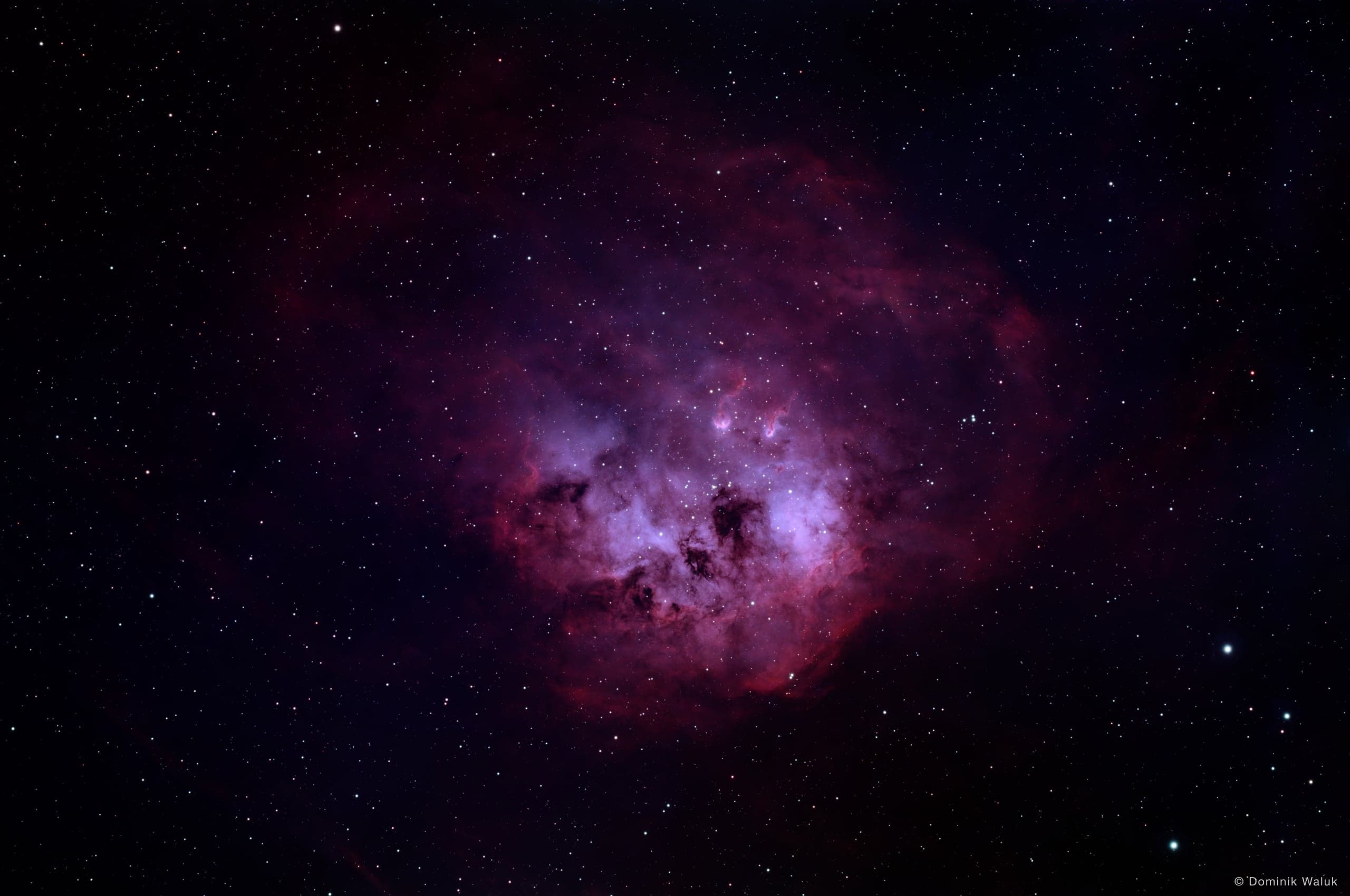
  14. The Tadpole Nebula: a pink and violet glowing cloud of gas with dark knots of dust at its centre, surrounded by a faint red veil.

    IC 410

    Tadpole Nebula

    The Tadpole Nebula (IC 410) is an emission nebula located approximately 12,000 light-years away in the constellation Auriga. Within its glowing hydrogen clouds lie two remarkable dark structures, known as Simeis 129 and Simeis 130, dense formations of gas and dust where new stars continue to emerge.

    This image reveals the famous tadpole-shaped structures suspended within a sea of red hydrogen gas. The dark cores visible within them are dense clouds of dust known as Bok globules, stellar nurseries that block the light behind them while sheltering the earliest stages of star formation.

    What fascinates me most about this object is how unmistakably the tadpoles appear against the glowing red background. Drifting through the vastness of space, they resemble something remarkably familiar and down to Earth, yet each structure stretches across several light-years. Seeing such simple and recognisable forms emerge from a distant stellar nursery is what makes this image feel both extraordinary and strangely comforting.

    Image details

    Location
    Zürich, Switzerland
    Telescope
    ZWO FF130 APO
    Camera
    ZWO ASI2600MC Duo
    Mount
    Sky-Watcher EQ6-R Pro
    Filter
    Optolong L-Ultimate
    Total integration
    10 hours
    Processing
    PixInsight
    Get photograph
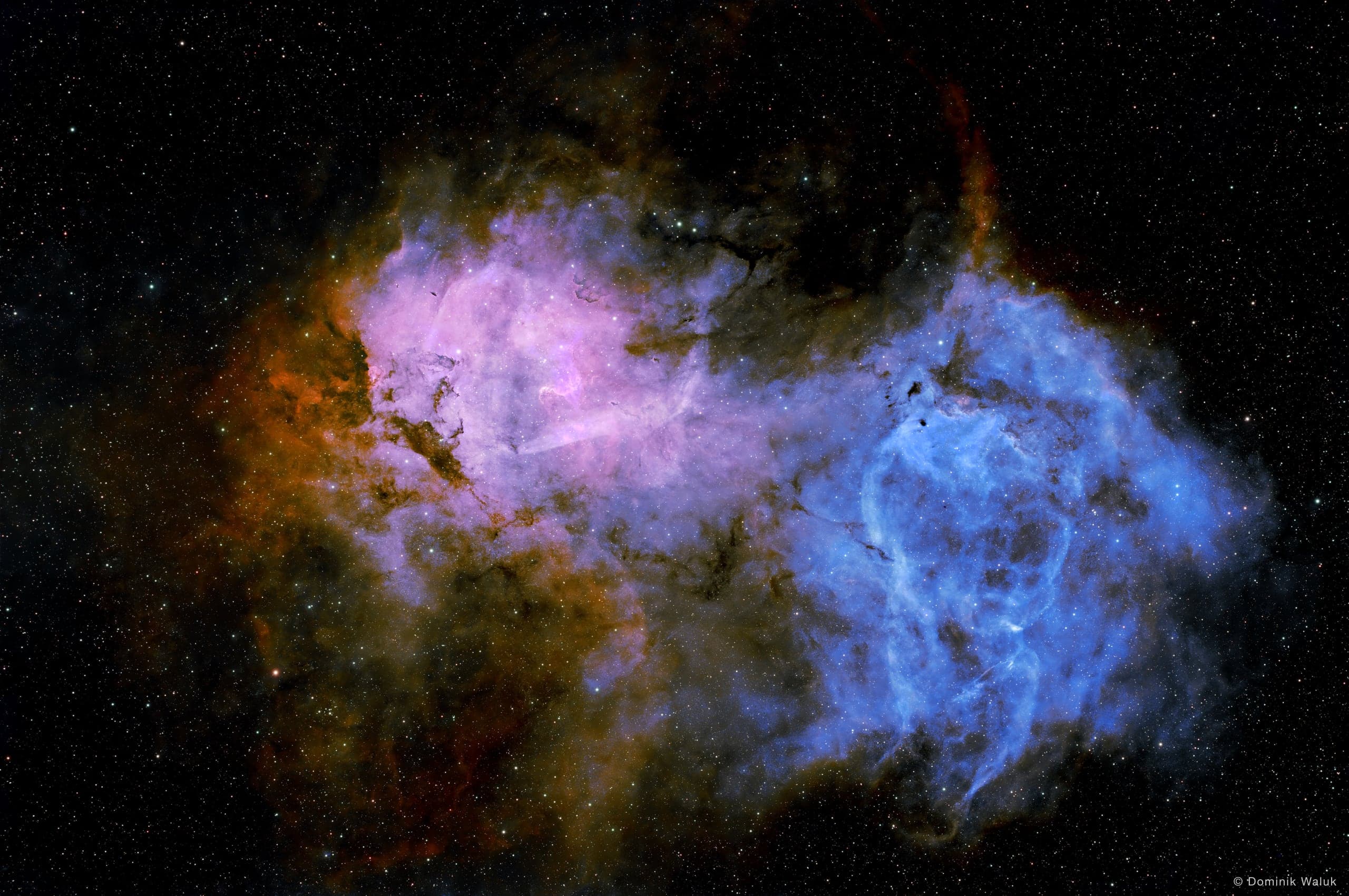
  15. The Lion Nebula: a large cloud of gas in violet, blue and gold with fine filaments, against a dense field of stars.

    Sh2-132

    Lion Nebula

    The Lion Nebula (Sh2-132) is a large emission nebula located in the constellation Cepheus. Its glowing clouds of hydrogen and oxygen are energized by several massive stars, including Wolf-Rayet stars, whose intense radiation and stellar winds continue to shape the surrounding region.

    This image reveals the complex interplay between red hydrogen and blue oxygen emission throughout the nebula. Particularly striking is the vivid blue bubble in the lower part of the image, formed by powerful stellar winds from the Wolf-Rayet star WR 152, which have carved a cavity in the surrounding gas.

    Unlike some objects whose shape only becomes apparent after careful observation, I immediately saw an animal staring back at me when I first processed this image. Beyond the lion-like outline itself, what continues to draw my attention is the contrast between the bright red structures and the deep blue oxygen bubble, creating a scene that feels both natural and surprisingly artistic.

    Image details

    Location
    Zürich, Switzerland
    Telescope
    ZWO FF130 APO
    Camera
    ZWO ASI2600MC Duo
    Mount
    Sky-Watcher EQ6-R Pro
    Filter
    Optolong L-Ultimate
    Total integration
    10 hours
    Processing
    PixInsight
    Get photograph
  16. The Teddy Bear Nebula: a red glowing cloud of gas with dark veils of dust, right of centre in a dark field of stars.

    Sh2-171

    Teddy Bear Nebula

    The Teddy Bear Nebula (Sh2-171) is an emission nebula within the larger NGC 7822 region in the constellation Cepheus. Illuminated by the young star cluster Berkeley 59, its glowing hydrogen clouds and dark dust structures form a complex environment where star formation continues to take place.

    This image reveals the features that give the nebula its teddy bear-like appearance, formed by bright stars and dark dust lanes embedded within the glowing gas. Particularly striking is the dense pillar of dust stretching through the nebula, blocking light from behind it and creating a remarkable sense of depth across the entire scene.

    The teddy bear shape is impossible to ignore once it becomes visible, yet what fascinates me most is the feeling of looking through the nebula rather than simply at it. Following the dark pillar deeper into the glowing clouds reveals layers of light, dust and structure that transform a playful shape into a vast and surprisingly immersive cosmic landscape.

    Image details

    Location
    Zürich, Switzerland
    Telescope
    ZWO FF130 APO
    Camera
    ZWO ASI2600MC Duo
    Mount
    Sky-Watcher EQ6-R Pro
    Filter
    Optolong L-Ultimate
    Total integration
    10 hours
    Processing
    PixInsight
    Get photograph

From the 2027 calendar